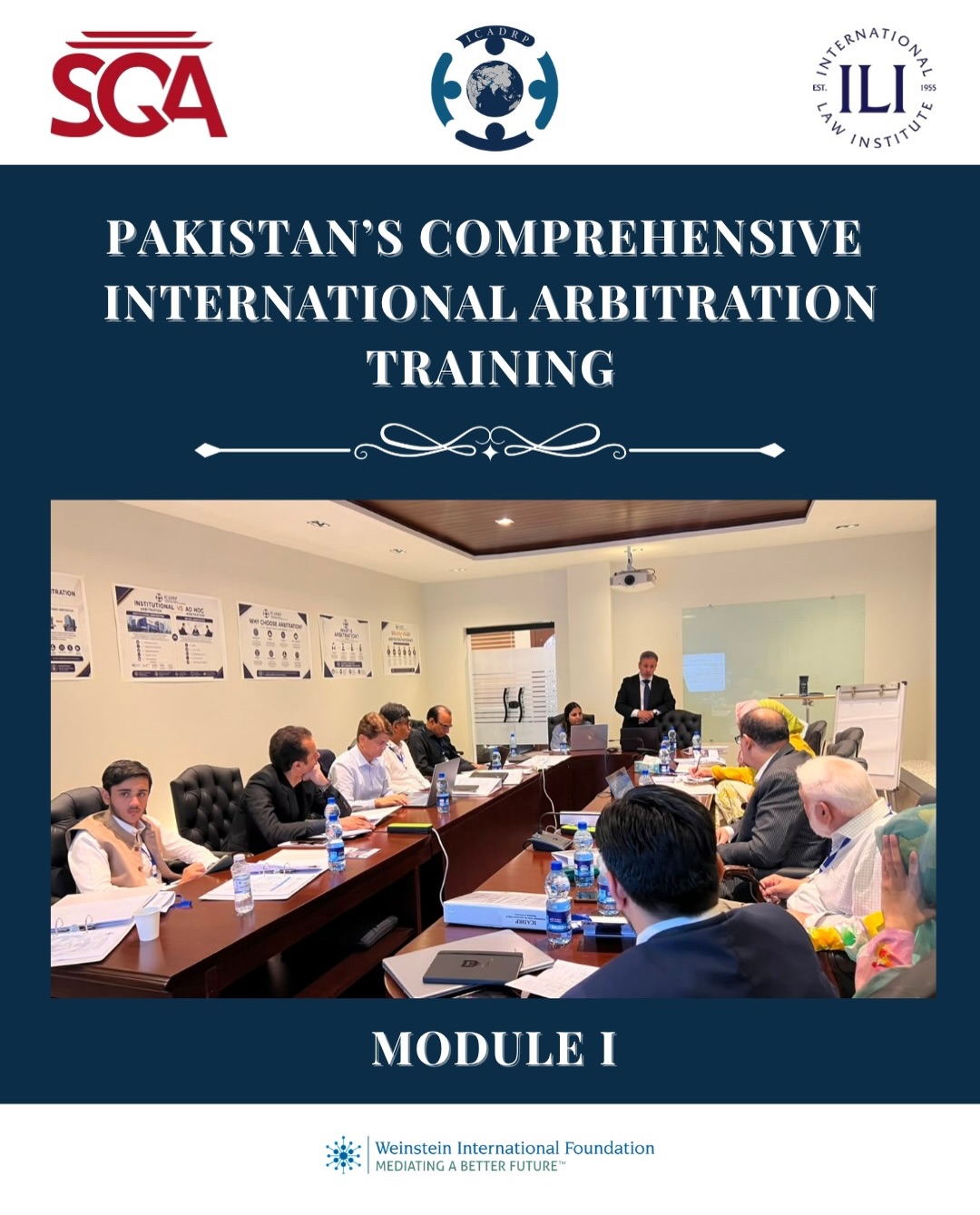
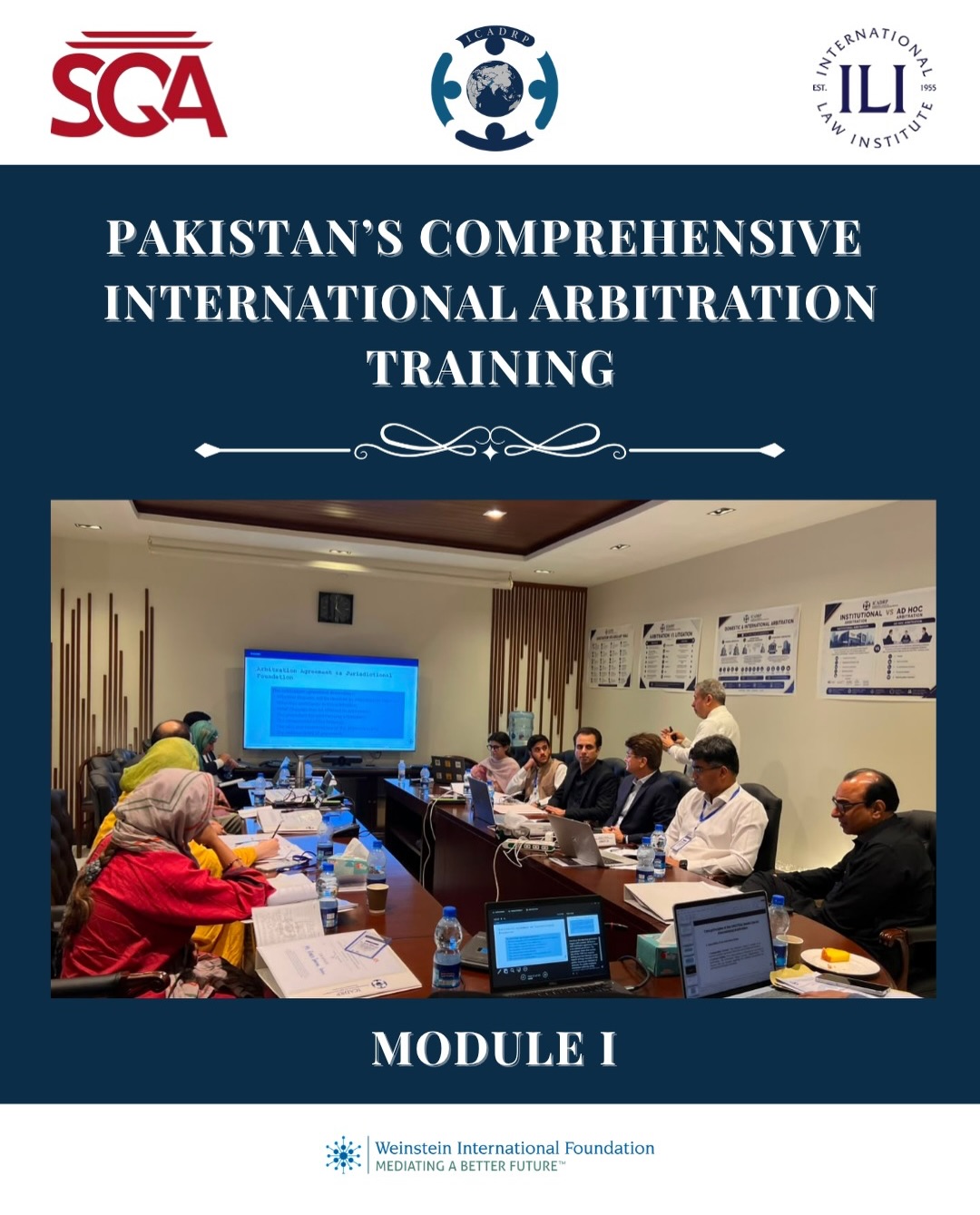
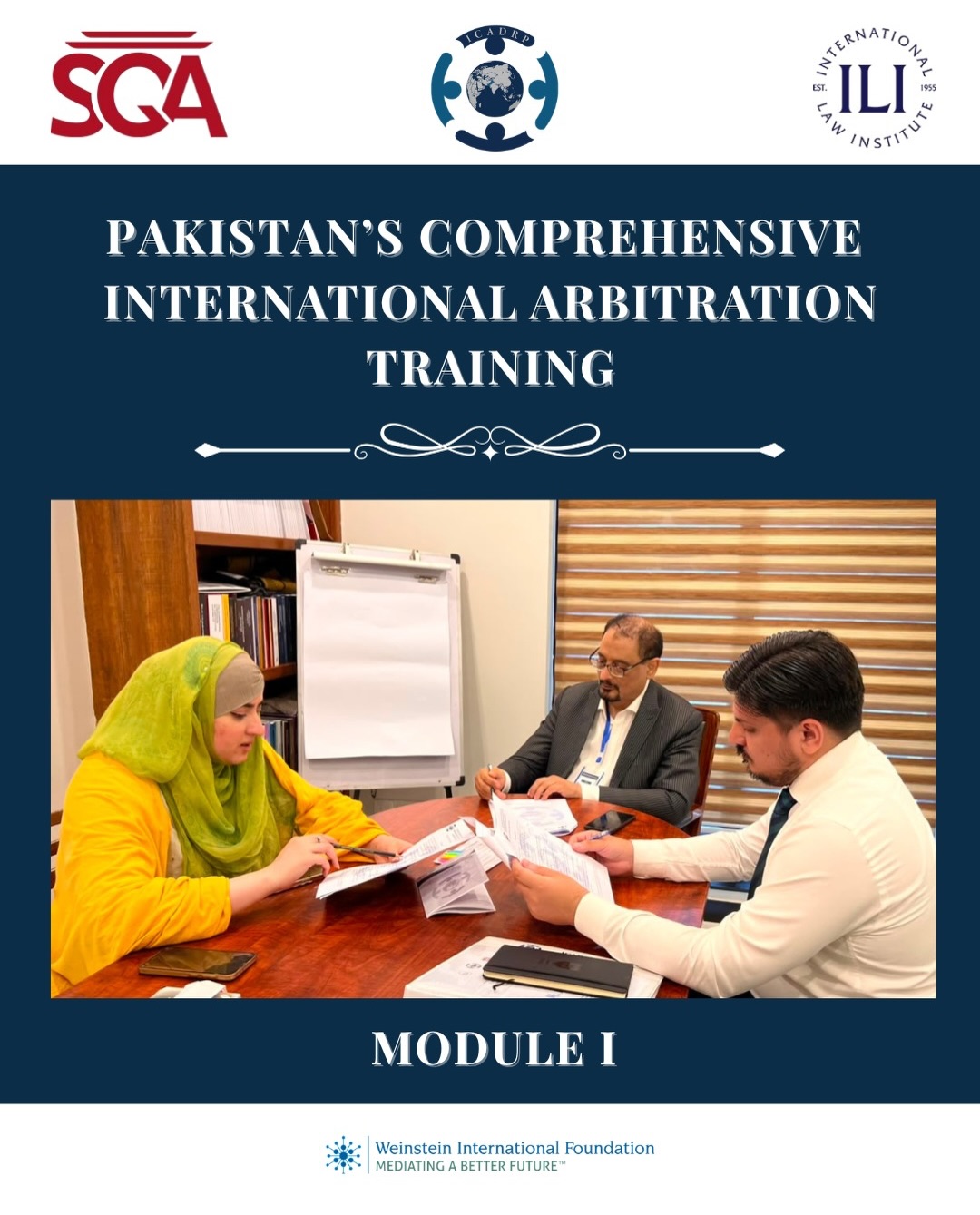
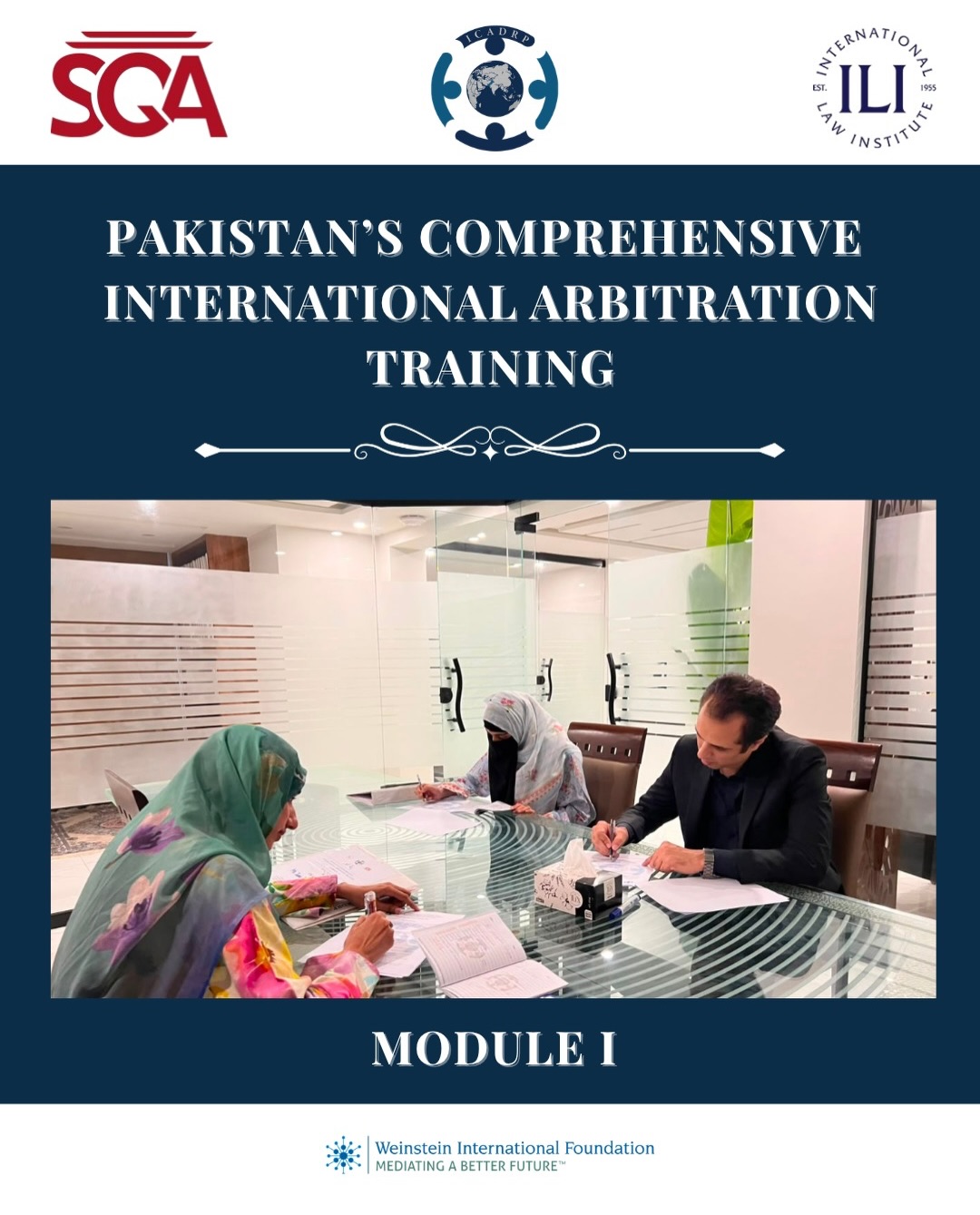
The first day of the Accredited International Arbitration Training – Module I laid a strong foundation for understanding the principles and practice of modern arbitration through an engaging blend of theory, comparative analysis, and practical discussions.
The sessions commenced with an orientation to the programme, followed by an in-depth exploration of the legal foundations of arbitration, tracing its evolution and examining its growing significance as a preferred mechanism for resolving commercial and investment disputes. Participants gained a comprehensive understanding of the distinctions between domestic, international commercial, and investment arbitration, as well as the differences between institutional and ad hoc proceedings.
The programme further examined core jurisdictional principles, including Kompetenz-Kompetenz, arbitrability, the doctrine of separability, and the authority of arbitral tribunals. Participants also explored Pakistan’s arbitration framework through discussions on the Arbitration Act, 1940, the Recognition and Enforcement (Arbitration Agreements and Foreign Arbitral Awards) Act, 2011, and the ICSID Act, 2011, while drawing comparisons with internationally recognised arbitration standards and the UNCITRAL Model Law.
Interactive discussions and practical framework-identification exercises encouraged participants to apply legal principles to real-world scenarios, reinforcing key concepts through collaborative learning and critical analysis.
The day’s sessions were led by Mr. Carlos Dávila and Dr. Nudrat E. Piracha, whose expertise and practical insights provided participants with a comprehensive introduction to the legal and procedural foundations of arbitration.